Over the last 6 weeks I have had a tangible improvement in my skill with this bike. While it will be a while before I am zipping around with no hands I am able to safely maneuver around town with minimally fatal tendencies. This course has given me a chance to start fresh at a new skill. With this learning opportunity mindful learning has been a big for me, whether that be through actively concentrating on my form, or integrating new aspects of this class into my program.
We have seen that understanding not only what we will learn, but also how we will learn is necessary for effective learning and is pivotal to success and retention. Right from week one extra effort has been taken to engage with the course material. This has aided in the consolidation and encoding of the class content, encouraging the highest level of storage and retrieval. On that note, I have and will be doing the bulk of this post purely from memory to test my recall:
If you want a breakdown of my learning challenge take a look at Step 3 & 4 of this outline: https://theyearntolearn.home.blog/2019/05/19/personal-learning-challenge-post1/
Several methods have been implemented during the course of this project with varying levels of success. In the spirit of behavourism I gave myself positive reinforcement when I adhered to my project plan (I am now 146 dollars richer). With the money I put aside as a reward I have used to purchase a fitbit so that I can track my biking with far less effort. This is because I intend to continue this project beyond the scope of this class. While I initially kept my travel diary on a trip-by-trip basis, after a few weeks it was relegated to bare-bones status; I was still tracking distance and time, but the feelings were less important as it was not particularly useful anymore. This may actually have been a natural part of the experience, as one of my goals was to adjust my lifestyle. At a certain point the biking became so mundane and natural that it no longer required significant thought. I was still careful to note when I felt inefficient, but they more specific questions that could be found quickly without needing long explanations. Sore neck? Stop hunching? Painful hand? You are squeezing too hard. Foot hurting? Don’t use feet as breaks…
As we progressed through the course we learned about different styles of teaching and mentorship. This was very important in my improvement as there were very knowledgeable people around me who were veritable fountains of information. With some one-on-one help with bike maintenance I was zipping around lickity-split.
To see some of the problems with my bike and how my brother helped me fix them take a look at: https://theyearntolearn.home.blog/2019/05/26/personal-learning-challenge-post-2/
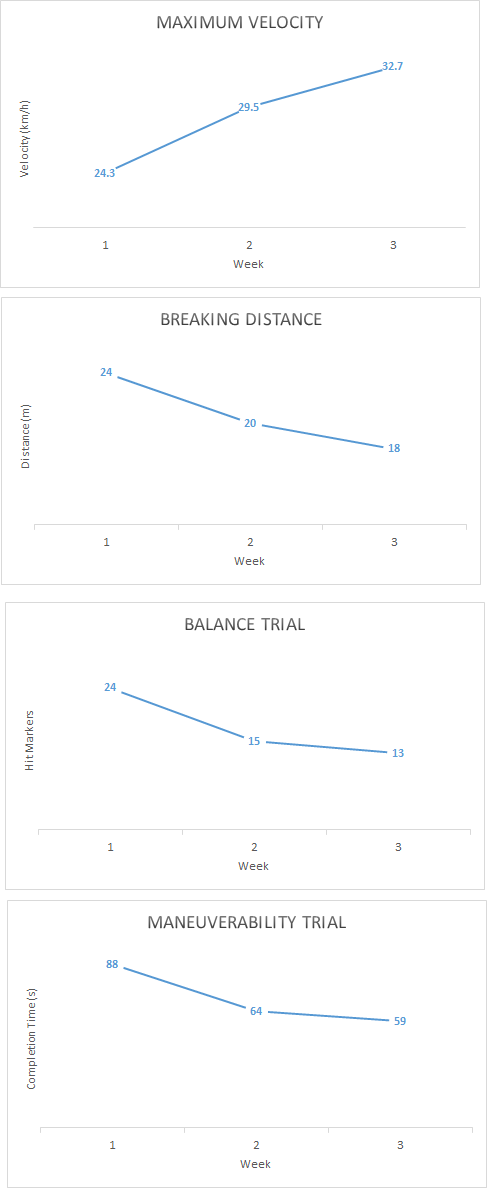
The uses of learning communities cannot be underestimated, as they are an effective way to voice questions and concerns as well as receive feedback and support. These communities, which can be online or face-to-face, have played a huge role in the development of my biking. The amount of expertise that goes untapped is frankly quite sad, as people are reticent to engage with experts when they can get an amateur YouTube tutorial. During my third week of this project I engaged with the Uvic biking community to get some pointers on how to improve my biking. If you want to see the tracking of my trial data you can check it out here: https://theyearntolearn.home.blog/2019/06/02/personal-learning-challenge-post-3/
While I have found that my psycomotor learning has been aided best through face-to-face interaction and repetition, this is due to my learning circumstance. I have ready access to my bicycle and I can easily meet up with anyone from the biking community at the drop of a hat. But if I were, for example, renting a bike or living in a remote area, either of these could be limiting factors. In the latter example an asynchronous method of teaching could be useful. If I was limited to only a few specific hours for my practice, following an online training guide might be the only way to go! In the former example going to a weekly webinar group class (yes, online spin classes are a thing!) could be the only interactive/real time exposure to an instructor.
In this class we were constantly given new aspects to mull over and possibly integrate into our projects. This has had some mixed results in my case. After making what I thought was a fairly straightforward plan initially, I found that there were entire aspects of digital learning that were missing from my plan. In some cases these were easy to add to the plan, as seen with the joining of biking chat rooms and forums. But other resources like open source learning platforms were not really compatible with the scope of my learning plan. For the most part I was able to retain the general structure of my challenge will adding when I felt there was merit. Honestly this is how I feel that teaching should be done. Not every aspect of learning can be crammed into every lesson, otherwise we end up with a counterproductive conglomeration of methods that more closely resembles Frankenstein’s monster than a lesson plan…

Of the many neat projects that have spawned due to this class I have been regularly following those of Chloe, Chelsea and Alex’s. While for the most part my improvement has been straightforward, their projects have been more nuanced than “can you make wheels spin good” My favourite posts have involved the obstacles that they found and worked to overcome. I hope that Alex continues with some updates so that one day we can see a video of him performing his coin tricks. Generally when I am feeling lot for direction in these posts, I like to read their thoughts on the previous week and usually it inspires some idea for my own posts. Sometimes I just look at Chloe’s site because it’s pretty. LIKE WOW. Check out their sites here:
https://chloesplace.home.blog/
https://alexdeweert.home.blog/
https://onlineacademiccommunity.uvic.ca/chelseacrawfordedci335/
At the conclusion of this project I intent to continue biking. If I am still enamoured by the end of the summer I will look at investing more that 40 dollars into a more trustworthy bike. I would like to thank the members of Spokes in particular as they have been pivotal through their contributions of both materials and expertise. Definitely check out their website if this piques your interest:
https://www.uvic.ca/sustainability/involved/spokes/
Thanks to every who made this project a blast to complete.
Thom Campbell, signing off…
References
Bates, A. (2011) Marshall McLuhan and his relevance to teaching with technology, Online learning and distance education resources
https://www.uvic.ca/sustainability/involved/spokes/
Krathwohl, D.R. (2002) A Revision of Bloom’s Taxonomy: An Overview. In Theory into Practice, Vol. 41, No. 4 College of Education, The Ohio State University. Retrieved from http://www.unco.edu/cetl/sir/stating_outcome/documents/Krathwohl.pdf
6.1 Choosing technologies for teaching and learning: the challenge